Science, sailing, and snowpack come together in Snow to Sea
By Sara Welsh | Director of Strategic Development
From mountain snow to Bellingham Bay, students explore Whatcom County through hands-on science, outdoor adventure, and community partnerships
Snow to Sea, a dynamic outdoor learning pathway for middle school students at Nooksack Valley Middle School, is heading into its fourth year of programming, and it continues to be one of the most exciting examples of place-based learning in Whatcom County.
Designed as a real-life “Ski to Sea” experience, Snow to Sea follows water molecules from the high alpine headwaters of the Nooksack River all the way to the Salish Sea. Over three years, students in grades 6 through 8 learn the watershed by living it: snowshoeing in the mountains, climbing and exploring lakeside, visiting working farms, investigating tideflats, and sailing on Bellingham Bay. At every stop, students are introduced to local scientists, educators, farmers, and outdoor professionals who help connect classroom learning to real-world careers and ecosystems.
Hosted by a network of community-based organizations and coordinated by the Whatcom Coalition for Environmental Education (WCEE), Snow to Sea brings learning outdoors in ways that are joyful, memorable, and deeply rooted in place. Throughout the program, Vamos Outdoors Project provides bilingual, culturally responsive co-teaching to ensure Latinx, migrant, and multilingual students feel welcomed, represented, and celebrated in outdoor spaces.
Experiencing the Watershed, Step by Step
The Snow to Sea journey begins right at school with the Whatcom Explorer: Mobile Watershed, an interactive topographic and sand-table model provided by the Whatcom Conservation District. Students use the model to visualize river systems, understand erosion and flow, and map the places they will visit, grounding their learning in the watershed they call home.
Historically, sixth graders have traveled to the snowy headwaters of the Nooksack River at Mount Baker Ski Area, where snow science programming with the Northwest Avalanche Center (NWAC) introduced students to snowpack layers, crystal structures, and water content. While Mt. Baker is stepping back from hosting field trips this year, snow school experiences remain an essential part of the curriculum, and the collaborative is exploring new partnerships to continue teaching about the mountain origins of the watershed.
Later in the year, students spend two adventure-filled days at Camp Saturna on Silver Lake. There, learning feels like play. Students rotate through stations focused on water quality testing, stream ecology, macroinvertebrates, food webs, and the water cycle, while also building outdoor recreation skills through rock climbing and archery. These experiences align with Washington State learning standards while fostering confidence, teamwork, and curiosity.
“Our students thoroughly enjoyed every moment of the trip,” shared a 6th grade math and science teacher at Nooksack Valley Middle School. “The activities were engaging and educational, and gave them a unique opportunity to connect with nature in a hands-on way.”
In seventh grade, the focus shifts to how people interact with the watershed. Students visit a local farm in partnership with the Whatcom Conservation District, learning directly from farmers about animal care, the process of making food, and best management practices that protect nearby streams and salmon habitat. The experience is paired with hands-on water monitoring in a tributary of the Nooksack River, allowing students to see how land-use decisions directly affect water quality.
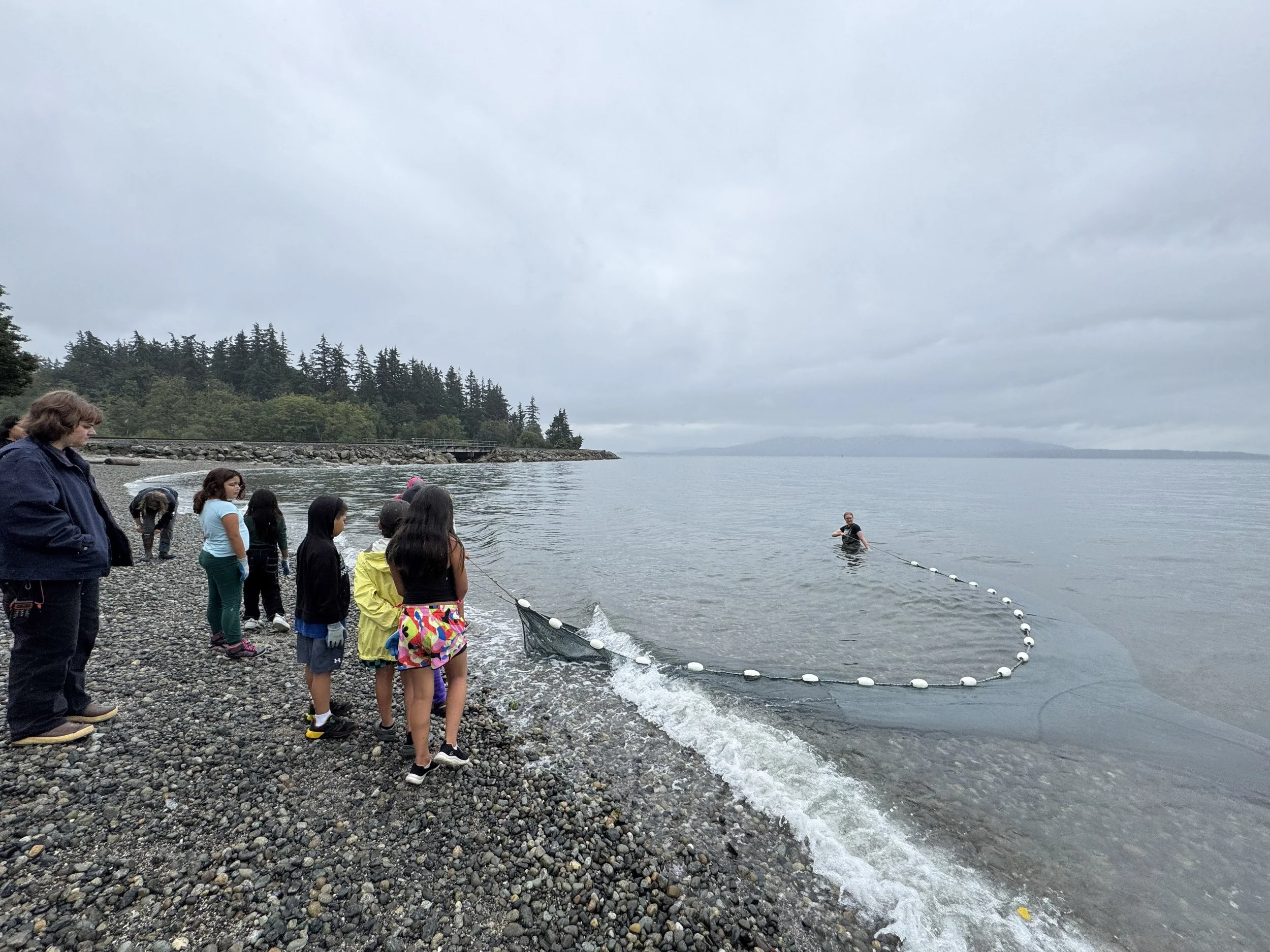
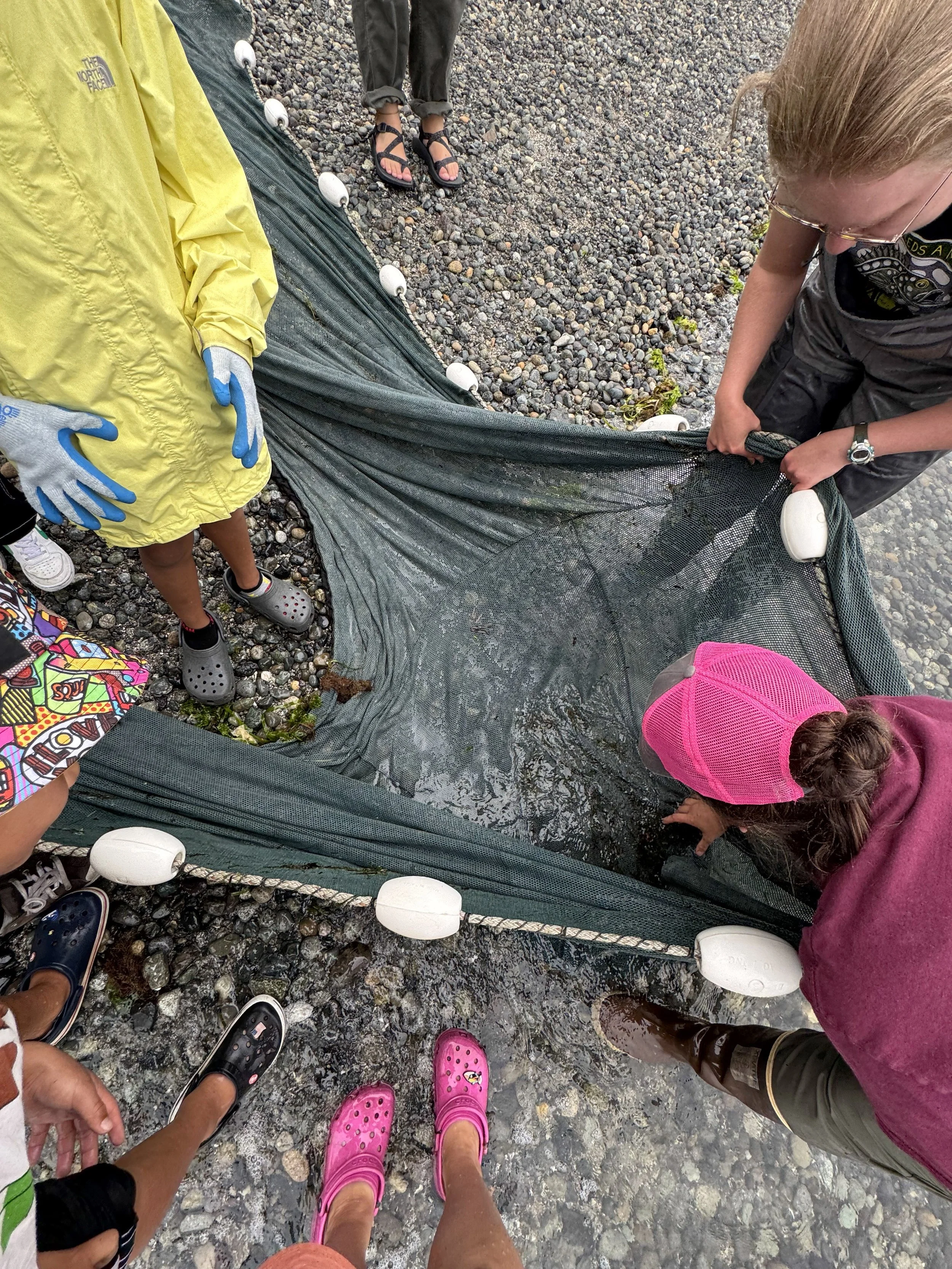
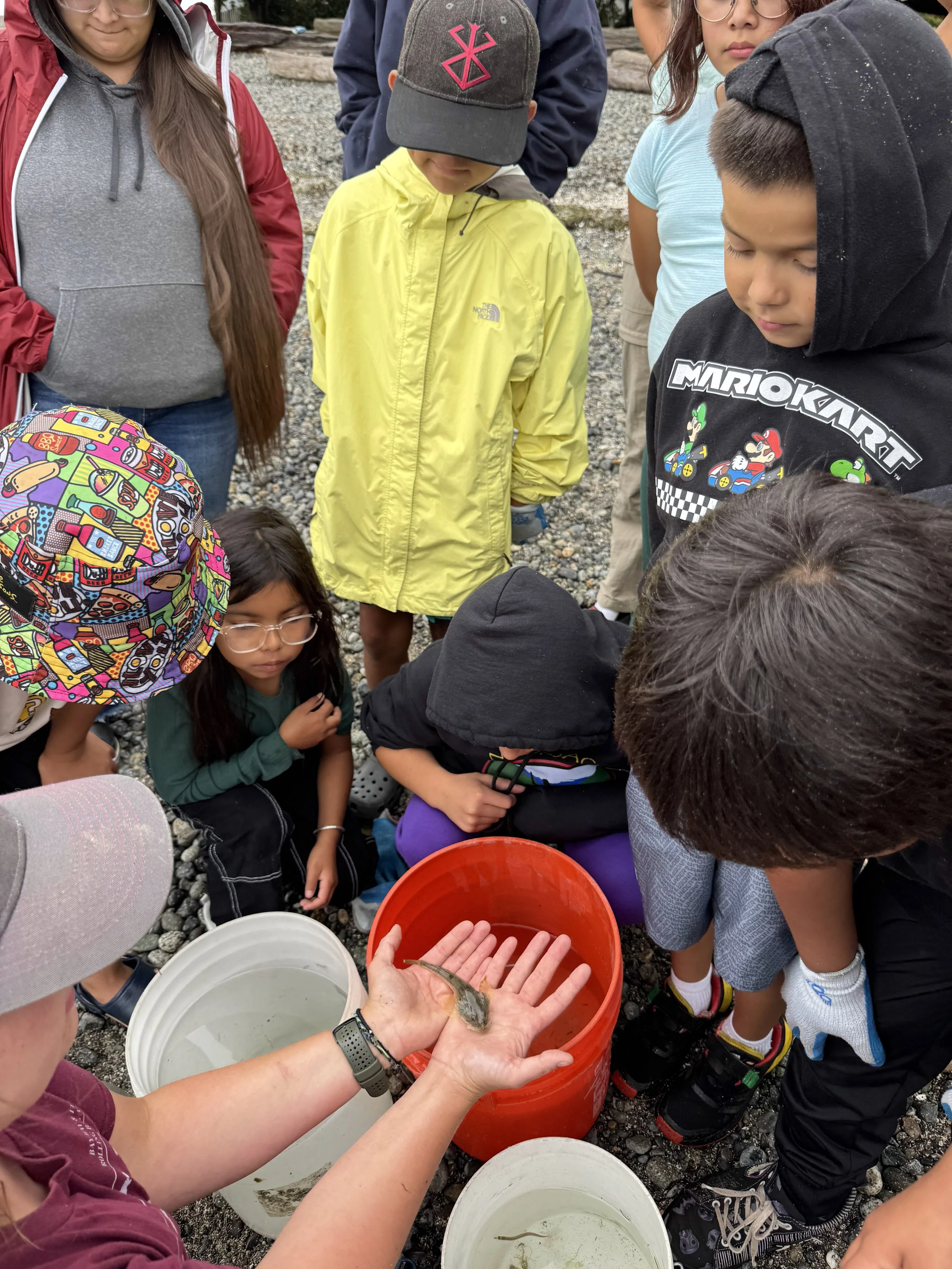
Students also travel to Birch Bay to explore intertidal ecosystems with marine educators from Gardens of the Salish Sea, an affiliate of the Pacific Shellfish Institute. There, students study marine biodiversity, dissect clams and oysters to learn shellfish anatomy, and search tideflats for signs of life, discovering how upstream rivers and downstream marine environments are deeply connected.
“I learned that the water from the rivers and the creek is very important to the watershed and is full of life and used for many things,” shared one seventh-grade student.
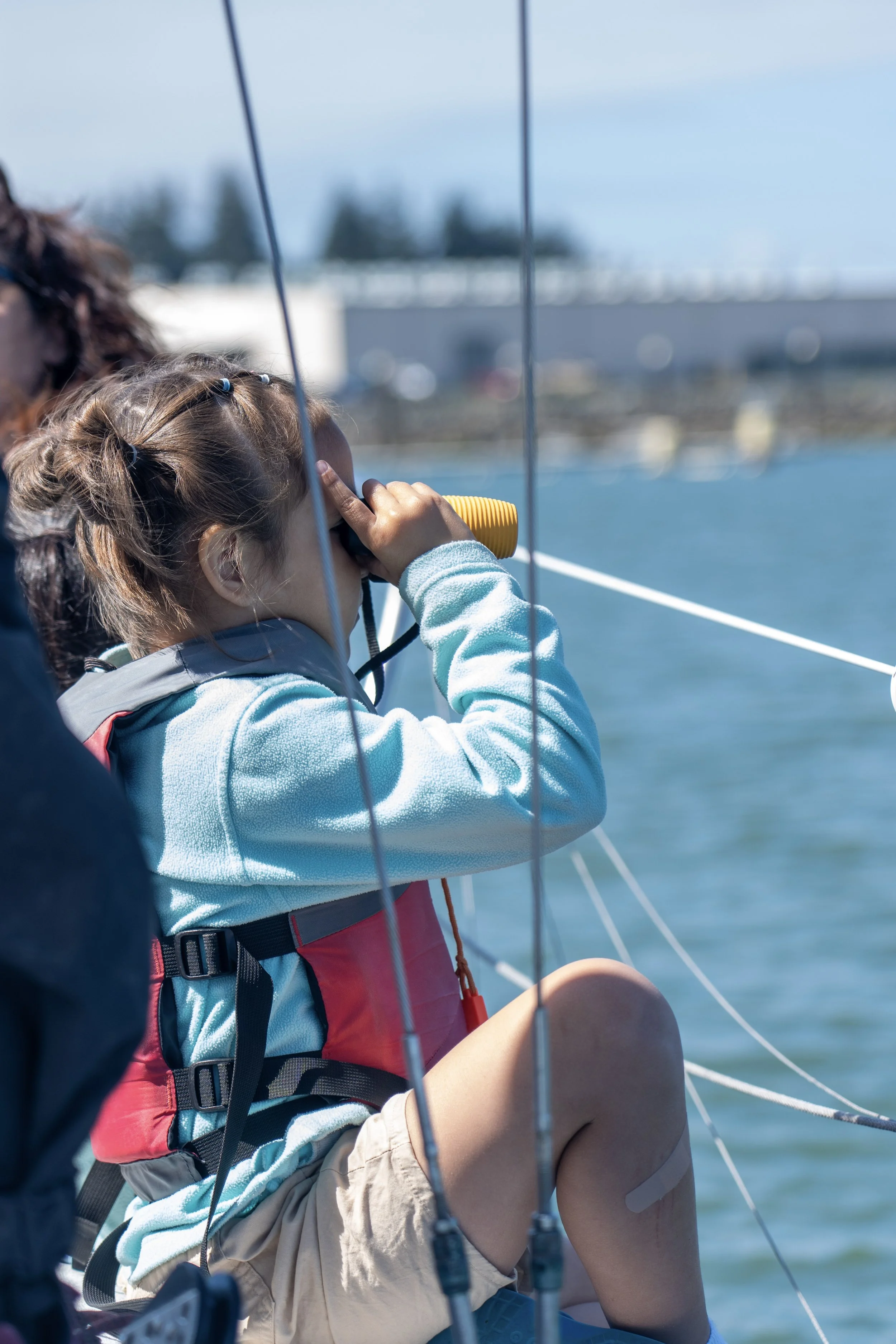
The Snow to Sea journey culminates in eighth grade with sailing expeditions on Bellingham Bay through the Community Boating Center. For many students, this is their first time on a sailboat and often their first time on saltwater.
Students raise sails, take turns skippering, collect water quality samples, and look back toward Mount Baker as instructors help them trace the journey water takes from snow to sea. Lunch on the beach and shoreline investigations round out the day, reinforcing lessons about stewardship, connection, and shared responsibility.
“The Snow to Sea program has been transformative for our students,” said Joel Vanderyacht, Principal of Nooksack Valley Middle School. “For many, these were first-time experiences in nature especially sailing. Beyond the excitement, we saw students take on new challenges, build confidence, and form stronger relationships through shared adventure.”
Looking Ahead
Snow to Sea was originally launched with support from the Washington Recreation and Conservation Office (RCO) Outdoor Learning Grants, a program that has since been cut at the state level. The program has also benefited from legislative support, including funding championed by Representative Alicia Rule. As Snow to Sea enters its fourth year, WCEE and its partners continue working together to sustain this collaborative model and ensure students can keep learning across the landscapes and waters that define Whatcom County.
As Snow to Sea grows, it remains a powerful example of what’s possible when education moves beyond classroom walls, offering students a fun, meaningful, and unforgettable way to learn their watershed from the mountains to the sea.
To learn more about the Snow to Sea program, visit: https://www.whatcomenvironmentaleducation.com/snow-to-sea-program